

The “Fake Reader” Phenomenon
The world of books as an idiocracy

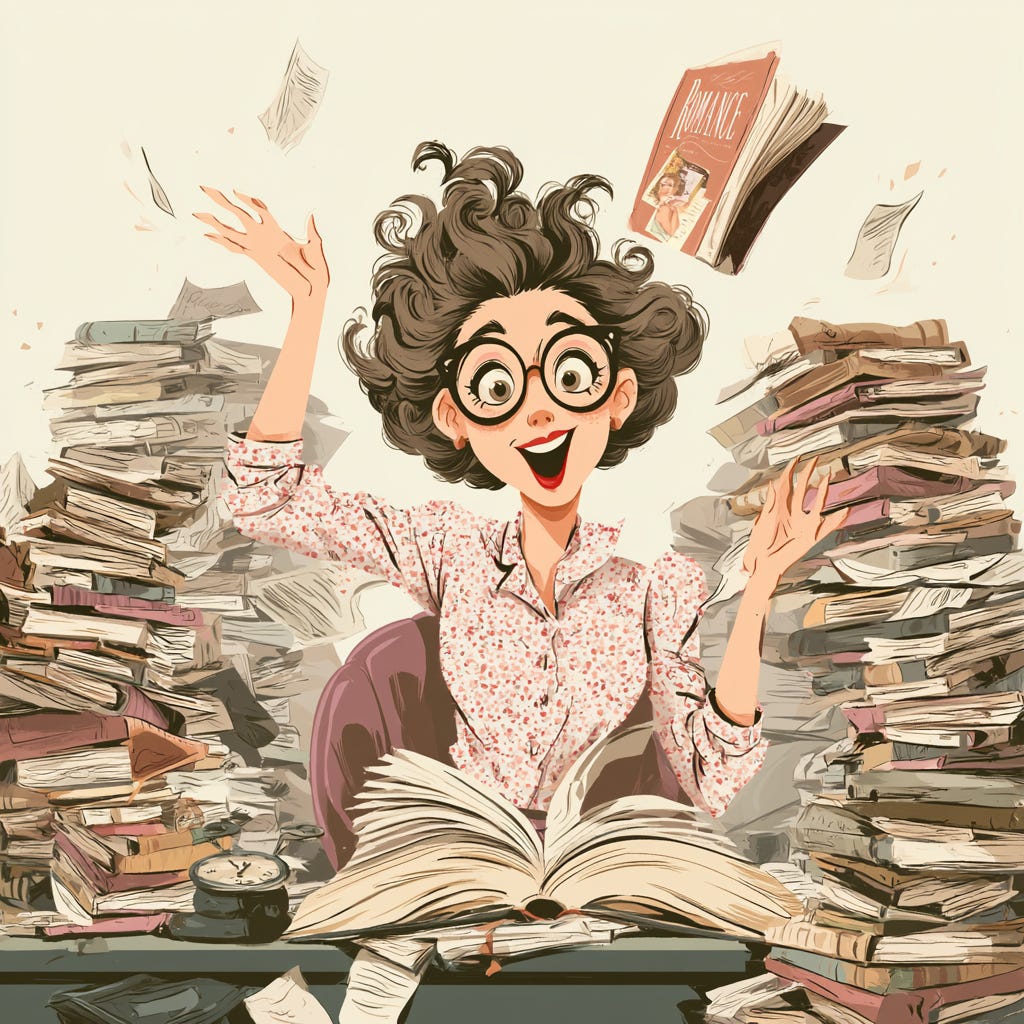
Last night I watched Kristin McTiernan’s latest offering over on the “toob” and it was a doozy. I’m sort of vaguely aware of the whole social media “influencer” world of book reviewers. I don’t pay much attention to that world, because at first glance it seems like a lot of soprano-voiced (oof) young women fast-talking about the latest traditionally published romantasy/cozy mystery/spicy romance thing. That is to say, things I couldn’t care less about.
Actually, it looks like that at second glance, too.
The state of this parade of engagement farming is more than a bit alarming. Apparently there’s a whole culture of “book tok” and “book tube” and “Goodreads” reviewers (or clubs) where the goal is not necessarily to find and share good books, but to see who can “review” the most. McTiernan mentions a journalist who compares things like the Goodreads Challenge to “competitive eating,” like a pie eating contest. They’re not foodies. They’re not enjoying or even tasting the food. They’re just cramming it down their gullet as fast as they can to “win.”
Some of the “infuencerss” (the scare quotes are because they sure as heck don’t influence ME) are now admitting that their book count for a given year, some of them up to 200, is only achievable because they’re basically skimming the books. When they say they’ve “read” a book, they’re actually skipping everything but the dialog or listening to the audio version at high speed (we’re talking 3-5x here) while doing something else.
That is not reading, and I agree with McTiernan who says it’s actively harmful to a person’s cognitive health. She goes into more detail on this fallout in the essay that accompanies the video. It’s worth your time. If you’re wondering why your bank teller or coffee shop barista can’t comprehend simple concepts anymore, this is part of it.
In the meanwhile, I refuse to write down to a sixth grade level. When I was in sixth grade I didn’t read at sixth grade level. I was reading Asimov and Crichton and Clarke and Burroughs. I wanted to read what smart grownups read. I learned vocabulary and how adults thought and behaved. Especially how they behaved when confronted with malfunctioning rocket engines or Martian monsters or white blood cells.1
The Da Vinci Code was, by every honest measure, a trashy airport thriller with delusions of grandeur. And it outperformed the entire current publishing model because it understood something that the industry has since forgotten: readers want to feel smart.
The current state of Big Pub is actively designed to marginalize readers who read like adults, especially men (because apparently men are icky). Fortunately, for the rest of us, there are still goodly-sized publishers like Baen, and small outfits like Wargate, Jumpmaster, and Raconteur Press. Indies like Passage Press are printing high-quality hard and soft-cover books that any bibliophile would be proud to own, including beautifully “re-mastered” boxed sets of Hardy Boys and Nancy Drew mysteries, and a cornucopia of adult-level material. I recently picked up “Hollywood Samizdat” from them and was pleasantly surprised at the physical quality of the book.
As McTiernan says:
The question for readers is where will you turn your attention when the biggest publishing houses have made it clear they don't serve you? Are you giving independent authors and publishers a shot? I hope so. Because in the age of the "Look Inside" feature on every book retailer, there's no reason not to. Spend your book budget where you're treated best.
When you’re miniaturized and navigating a man’s blood stream in a submarine. Like you do.